|
|
| The company |
|
 |
|
 |
 |
| Lean Manufacturing |
 |
|
 |
Peecker Sound has applied the canons of Lean Manufacturing to its production strategies for many years now. This philosophy and method for introducing innovation in manufacturing processes was conceived and perfected by large Japanese companies starting in the mid-20th century. Under this approach, the production management process is designed in such a way as to create value for the customer at high quality levels with the lowest cost and quickest delivery time. Identifying which activities add value and which do not is paramount in lean production and, by classifying all their production activities under these two categories, companies can adopt strategies to boost the former and eliminate the latter.
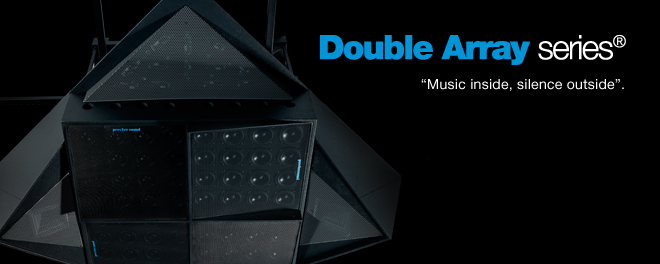
In operational terms, Peecker Sound production is organized according to the types of products being manufactured. - Catalogue products (or standard products) are produced under: A) BATCH production systems, with medium-sized batches for Loudspeakers and Control electronics. In this case, production is launched based on monthly estimated sales forecasts. The choice of producing for inventory is primarily determined by the seasonal nature of audio equipment for music venues. The period from February to July is mostly taken up by the production of series designed for summer venues, while from September to January production is geared towards medium-throw systems that are ideal for indoor installations (discotheques, night clubs, music pubs, lounge bars and so on). B) JOB SHOP production systems with small-sized batches (maximum of 8-10 items) of Double Array Series loudspeakers. In this case, production is launched in response to customer orders. Very often, two or more job orders are combined so as to minimize set-up costs, albeit under this system delivery to the customer takes longer.
To sum up:
| /// | Double Array Series | Other series and electronics | Type of Production
Launch | JOB SHOP
By customer order | BATCH
By sales forecast |
- Commissioned products ("Made to measure design") are produced under: PROJECT SHOP production systems, with extremely small-sized - almost single item - batches, and where design and production are launched exclusively in response to customer orders. These types of products are usually differentiated, i.e. they are custom-designed.
Note: a recent example of this kind of project was the design, production and installation of a powerful sound reinforcement system for the Parco della Grancia near the city of Potenza (http://www.parcostorico.it/).
Fig. 1 View of the Park amphitheatre
The production process Once a new product is designed, the departments jointly responsible for its development (Design, Engineering and Quality Control) send the documentation needed to define the production process to the Production Department. Formalizing everything that was set out during the design and prototyping stage is key to ensuring the functional interdependence of the various company units involved. The documentation includes the following: - CAD drawings of the parts to be produced;
- instructions on the raw materials to be used;
- instructions as to possible changes to the production process;
- estimate of monthly quantities to be produced;
- special control, testing and packaging instructions for the product to be made.
These documents are drafted by the Production and other production-related departments to develop the so-called "Process control tools".
Production as a whole is defined through manufacturing cycles, which indicate the sequence of the main manufacturing and assembly stages and identify the other two process control tools, consisting essentially of: A) process specifications
B) production equipment
Process specifications are the documents that define the production process and provide the means to ascertain whether it has been correctly implemented. They apply to:
- assembly cycles;
- final testing cycles;
- control sheets.
Production equipment refers to the physical, logical and informational tools required for the material implementation of the process.
In-process control During the production and assembly stages, quality control checks (dimensional, visual and so on) are performed by the staff responsible for these processes and, whenever required, by the Quality Control Department, which records these controls on the documents that accompany and identify the parts as evidence that they have been carried out. At the end of the assembly process, the products are individually tested through FMEA and Rapid Testing methods using testing sheets. In this case too, the evidence that testing has been performed appears on the identification documents.
Fig. 2 Reliability tests being performed on the speakers |
|
|
|
|
|